History
Dolphin Square Through Time
Dolphin Square, located in Pimlico, London, boasts a storied history that reflects both grandeur and intrigue. Completed in 1937, this massive apartment complex quickly became a symbol of luxury and modernity, attracting high-profile residents, including politicians, actors, and spies. During World War II, it housed military personnel and was a hub of wartime activity. The post-war era saw Dolphin Square continue as a prestigious address. Despite periods of change, Dolphin Square has remained an iconic fixture in London's architectural and social landscape, embodying a rich tapestry of historical events and cultural shifts
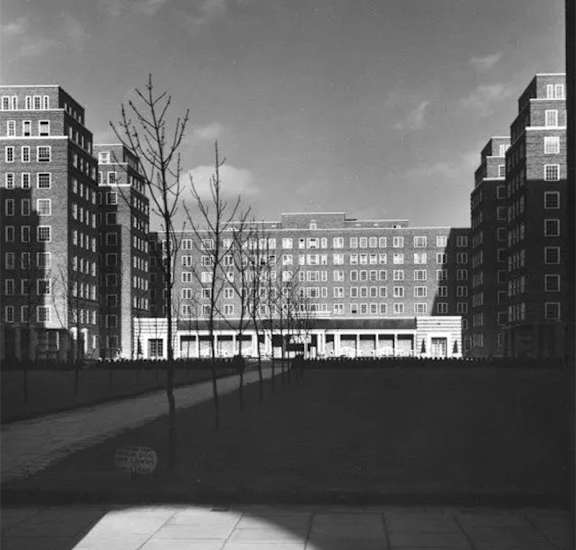
1935 - 1937
Costain completes construction on Dolphin Square
Completed in 1937 by builders Costain on the former site of a government owned army clothing factory, Dolphin Square is a feat of engineering. It cost £1.5 Million to build and took no fewer than 12 million bricks. Dolphin Square officially launched on 25th November 1936.
Credit for the naming of Dolphin Square can be attributed to an uncle of Sir Albert Costain, Director of the company responsible for the construction and early management of Dolphin Square.
A J Costain, headmaster of a school in Colwyn Bay, was staying with the Costain's in London when he mentioned that his school magazine was called 'The Dolphin'. He suggested Dolphin Court, but the layout of the buildings prompted the Costain's to settle on Dolphin Square.
Continuing the nautical theme, it was decided that each of the thirteen houses should be named after Admirals and other well-known figures from the United Kingdom's distinguished maritime history.
1940 - 1950
The Effects of the Second World War on Dolphin Square
- The residents of Dolphin Square endured an eventful Second World War.
- Grenville House hosted General De Gaulle's Free French headquarters.
- The car park became an ambulance depot, the gymnasium was transformed into a hospital, and the former bicycle shed was the mortuary.
- Air raid shelters were provided beneath Frobisher House. i3 bombs hit the square during the Blitz - the biggest of which fell on Frobisher and went thudding through the top four floors.
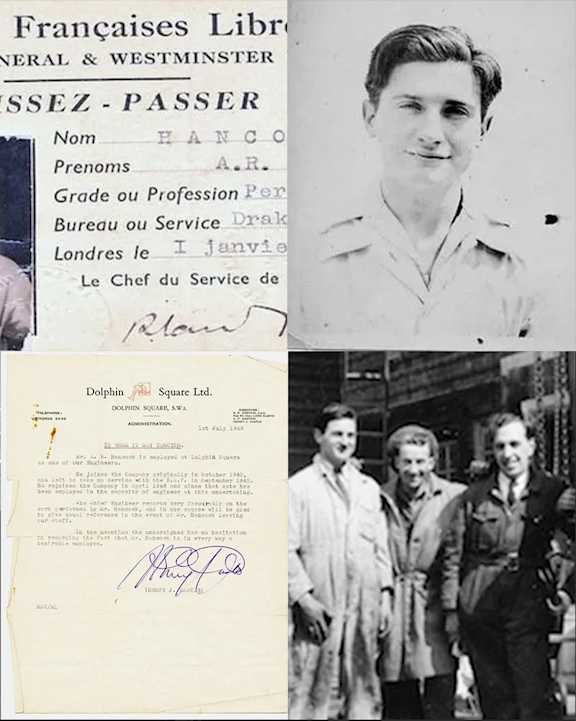
In 1940, 19-year-old Archie Hancock joined Dolphin Square as an engineer, working across the estate during one of the most significant periods in its history. More than 70 years later, in 2013, we had the privilege of welcoming Mr Hancock back to Dolphin Square to share his remarkable memories.
During the Second World War, Mr Hancock witnessed several bombs strike the Square. He recalled one bomb crashing through the roof and landing on a piano while it was being played. Remarkably, despite the dramatic impact, nobody was killed. Fortunately, the damage caused by the attacks was relatively limited, and extensive rebuilding was not required.
In January 1942, the Free French Forces established a presence at Dolphin Square. Security was exceptionally tight, with special passes required to access the areas they occupied. General Charles de Gaulle was among the notable figures who visited the Square during this time, although Mr Hancock never had the opportunity to see him in person.
Mr Hancock's memories provide a fascinating first-hand insight into Dolphin Square's wartime history and its role during a pivotal chapter of the 20th century.
1950s & 1960s
The "West End" Era of Dolphin Square
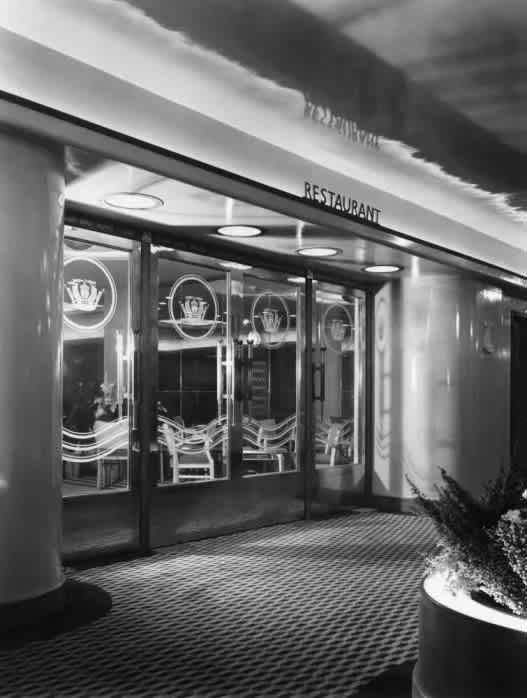
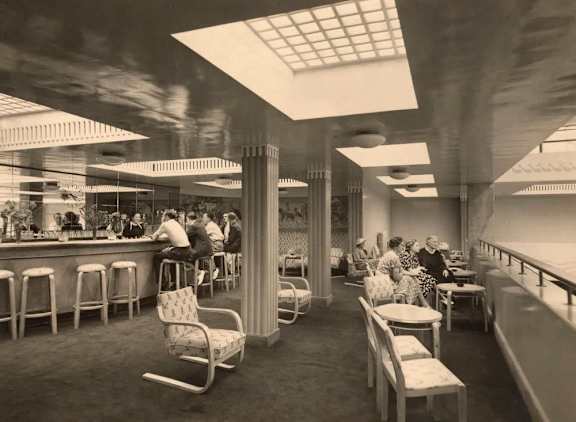
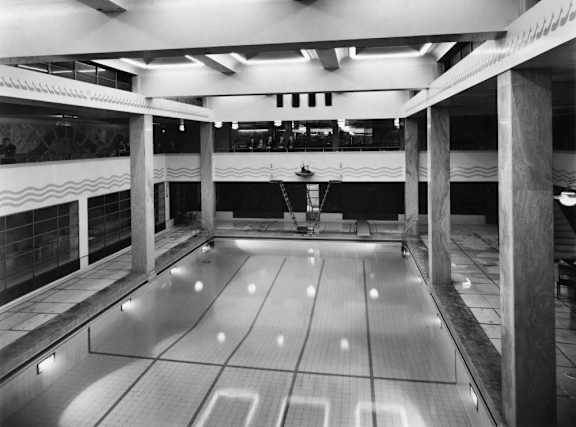
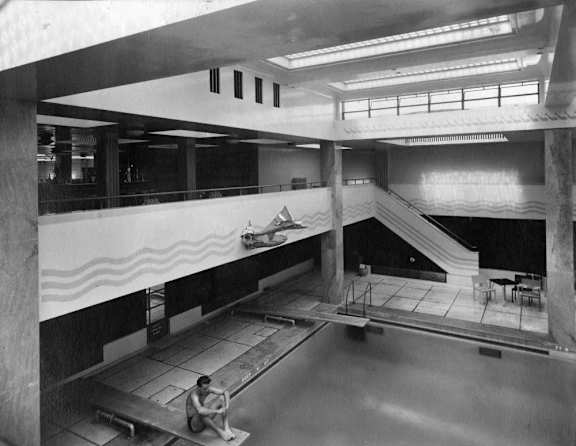
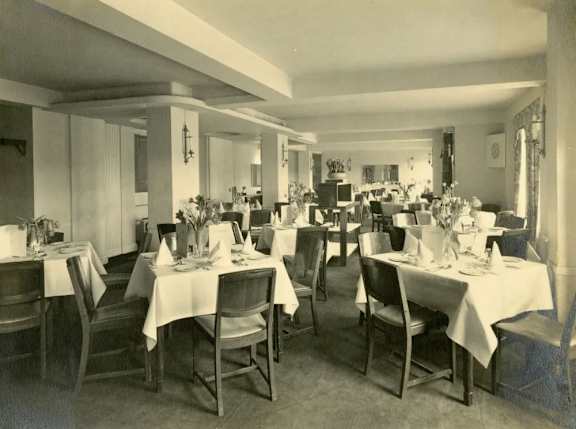
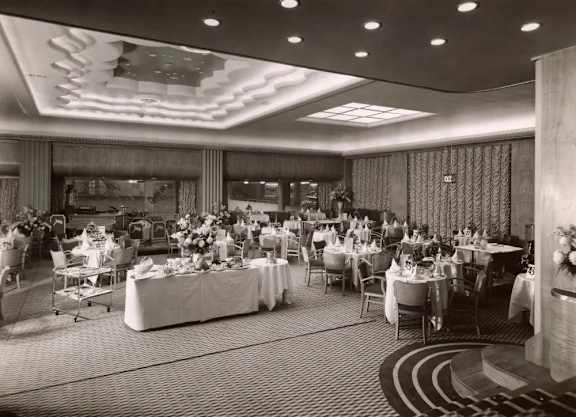
During the 1950s, Dolphin Square became one of London's most prestigious residential addresses and residents enjoyed an exceptional level of service. Shoes could be left outside front doors to be cleaned and uniformed porters, instantly recognisable in pillbox hats and white gloves, provided assistance throughout the estate. The Square's restaurant embodied the glamour of London's West End. Residents dressed in evening wear to dine, dance and socialise, creating an atmosphere of elegance that became synonymous with Dolphin Square during this period.
Dolphin Square also attracted significant investment. Costain sold the estate to a property entrepreneur for £2.25 million, and in 1959 it changed hands again for £3.1 million, reflecting its growing reputation and desirability.
In the early 1960s, Dolphin Square's links to espionage once again captured public attention. John Vassall, an Admiralty clerk living in 807 Hood House, was exposed as a Soviet spy in 1962. While rumours persisted that other intelligence operatives had frequented the Square, Vassall remains its most infamous espionage connection.
By the mid-1960s, Westminster City Council purchased the lease of the Square for £4.5 million and sublet it to the Dolphin Square Trust, which managed the estate as a housing association. This marked the beginning of a new chapter in the Square's history while preserving its standing as one of London's most distinctive residential communities.
1970 - 2006
Home to Politicians, Public Figures and Royal Connections
During the latter decades of the 20th century, Dolphin Square continued to attract a diverse and influential community of residents. Its proximity to the Houses of Parliament made it a popular home for Members of Parliament, peers and public servants from across the political spectrum.
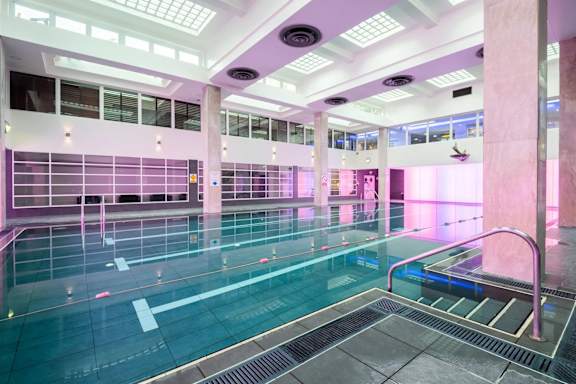
The Square also welcomed a number of high-profile residents and visitors. Princess Anne lived in Drake House during the 1970s, while Princess Diana is said to have used the renowned Dolphin Square swimming pool.
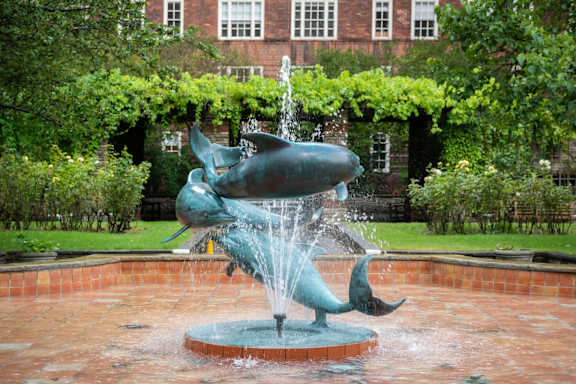
In the 1980s, the estate's gardens underwent a significant transformation with the creation of the Moroccan Garden, following a design competition. Around the same time, the iconic dolphin fountain, created by sculptor James Butler RA, was commissioned, adding a distinctive feature that remains a focal point of the Square today.

2006 - 2020
Westbrook and the Introduction of Serviced Apartments
In 2006, Dolphin Square entered a new chapter when Dolphin Square Trust and Westminster City Council agreed the sale of the estate to Westbrook. While remaining sensitive to the building's heritage and character, Westbrook embarked on a programme of investment, refreshing communal areas and apartments to meet the needs of modern residents.
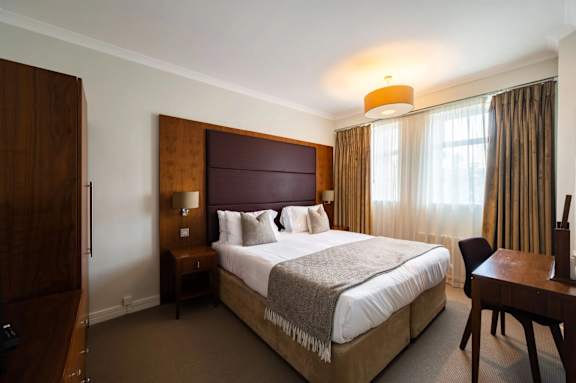
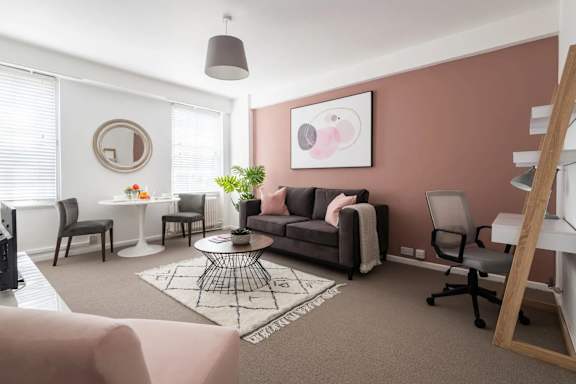
A significant milestone came in April 2006 with the closure of the Dolphin Square Hotel. The former hotel rooms were transformed into contemporary serviced apartments as part of a wider regeneration programme, leading to the launch of Dolphin House and broadening the range of accommodation available within the estate.
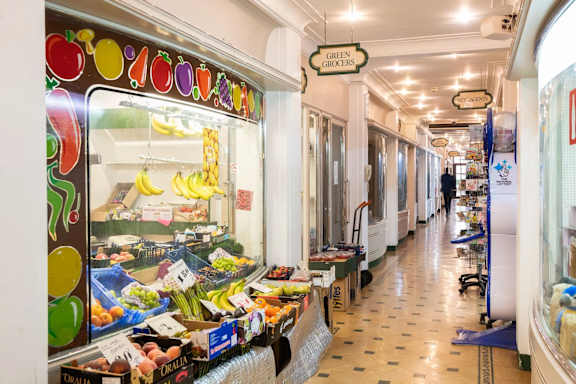
Throughout this period, the Shopping Arcade remained an important part of daily life at Dolphin Square. Residents and visitors could access a wide range of convenient services, including a dry cleaners, newsagent, hair salon, greengrocer and travel agency, reinforcing the estate's reputation as a self-contained community.
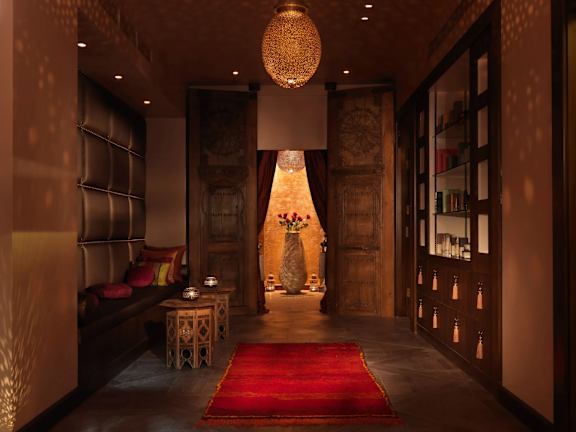
The Bar & Grill became a popular destination for residents and guests, serving seasonal dishes made with herbs and vegetables grown within the Square's own gardens. For relaxation and wellbeing, residents and the wider community enjoyed the award-winning Moroccan-inspired Spa, which became one of Dolphin Square's most distinctive and celebrated amenities.
2020 - Present
AXA Become the Asset Managers and Launch the Restoration Programme
The start of the new decade brought unprecedented challenges as the COVID-19 pandemic impacted communities around the world. During this period, AXA assumed asset management responsibility for Dolphin Square and launched the most significant investment programme in the estate's recent history, aimed at ensuring it continues to meet the needs of modern residents while safeguarding its future for generations to come.
The ambitious Restoration Programme marked the beginning of a new era for Dolphin Square. Rodney, Duncan and Beatty Houses became the first buildings to be taken offline to undergo comprehensive refurbishment, laying the foundations for the long-term renewal of the estate.
While restoration works progressed, Dolphin Square remained a thriving residential community. New initiatives, including the introduction of a pet-friendly policy, reflected the evolving needs of residents, while a programme of events and activities continued to foster a strong sense of community across the Square.
This period has also seen the launch of the largest lift modernisation programme in Dolphin Square's history, with all 28 lifts across the estate scheduled for replacement. Together, these investments are helping to preserve the character of Dolphin Square while enhancing the resident experience and preparing the estate for its next century.